Legal Billing November 17, 2026 12 min read
Lawyer Debt Collection Letter: Free Templates for Unpaid Legal Fees
Last updated: November 2026
Written by Ramit Kaur · Head of Marketing, LawAccounting
A lawyer debt collection letter is a formal written notice asking a client to pay an overdue invoice by a set date. It states the amount owed, the work it covers, how to pay, and what happens if the balance stays unpaid. Most firms send a short series of letters, starting with a friendly reminder and ending with a final notice, rather than a single demand.
This guide includes four collection letter templates you can adapt, a timeline for sending them, and the ethics rules that make collecting from your own clients different from collecting any other business debt.
What Is a Lawyer Debt Collection Letter?
A lawyer debt collection letter, also called a legal fee collection letter, is a written request from a law firm to a client who hasn't paid for legal services by the agreed due date. It does three jobs. It reminds the client of the balance, gives them a clear way to pay or set up a plan, and creates a record of the firm's efforts if the matter goes further.
The letter comes from the firm that did the work. That makes it different from a letter sent by a collection agency or by a lawyer collecting someone else's debt, and different rules apply, which we cover below.
How Much Legal Revenue Goes Unpaid?
Unpaid invoices are a growing problem, even at firms that are busy. Analysts at the Wells Fargo Legal Specialty Group found that in the first quarter of 2026, uncollected fees at large firms grew nearly 17% from a year earlier, while revenue grew a little over 13%. Collections also slowed by 6.5 days.
The delay adds up across the whole billing cycle. A 2026 law firm financial performance benchmark from Frontline Managed Services put average total lockup, the time from work being done to cash being collected, at 156 days, compared with 78 days at the best-performing firms. Firms took an average of 59 days just to send a bill.
A clear, consistent collection process won't fix slow billing, but it does stop billed invoices from sitting unpaid for months.
When Should a Law Firm Send a Collection Letter?
Send the first written reminder within a week after the due date, then follow a set schedule so every client is treated the same way. A simple timeline for most firms:
- 1 to 7 days past due: a friendly reminder, usually by email.
- 30 days past due: a second notice that's more direct and asks for a reply.
- 45 days past due: a payment plan offer, if the client has gone quiet or said they can't pay in full.
- 60 days past due: a final notice that states the next step and a firm deadline.
Your AR aging report tells you which invoices are in which stage. Our guide on how to read your law firm's AR aging report explains how to use the 30, 60, and 90-day buckets to decide who gets which letter.
Decide in advance who sends each letter. Many mid-size firms have billing staff send the first two, and have the responsible attorney sign the payment plan offer and final notice, since a letter from the lawyer who handled the matter carries more weight.
What to Include in a Debt Collection Letter From an Attorney
Every collection letter for unpaid legal fees should include:
- Firm and client details. The firm's name, address, and contact information, the client's full name and address, and the date.
- The matter. The case or matter name, so the client knows exactly which work the bill covers.
- The invoice details. The invoice number, the original invoice date, the due date, and how many days it's overdue.
- The exact amount owed. The original balance plus any interest or late fees, shown separately. Only include interest or fees if your engagement letter allows them.
- How to pay. An online payment link, mailing address for checks, and any other accepted methods.
- A deadline. A specific date, not "as soon as possible."
- An invitation to talk. A direct phone number or email for questions about the bill or a payment plan.
- The next step. In later letters, a plain statement of what the firm will do if the balance stays unpaid.
Attach a copy of the invoice to every letter, and attach the signed engagement letter to the final notice.
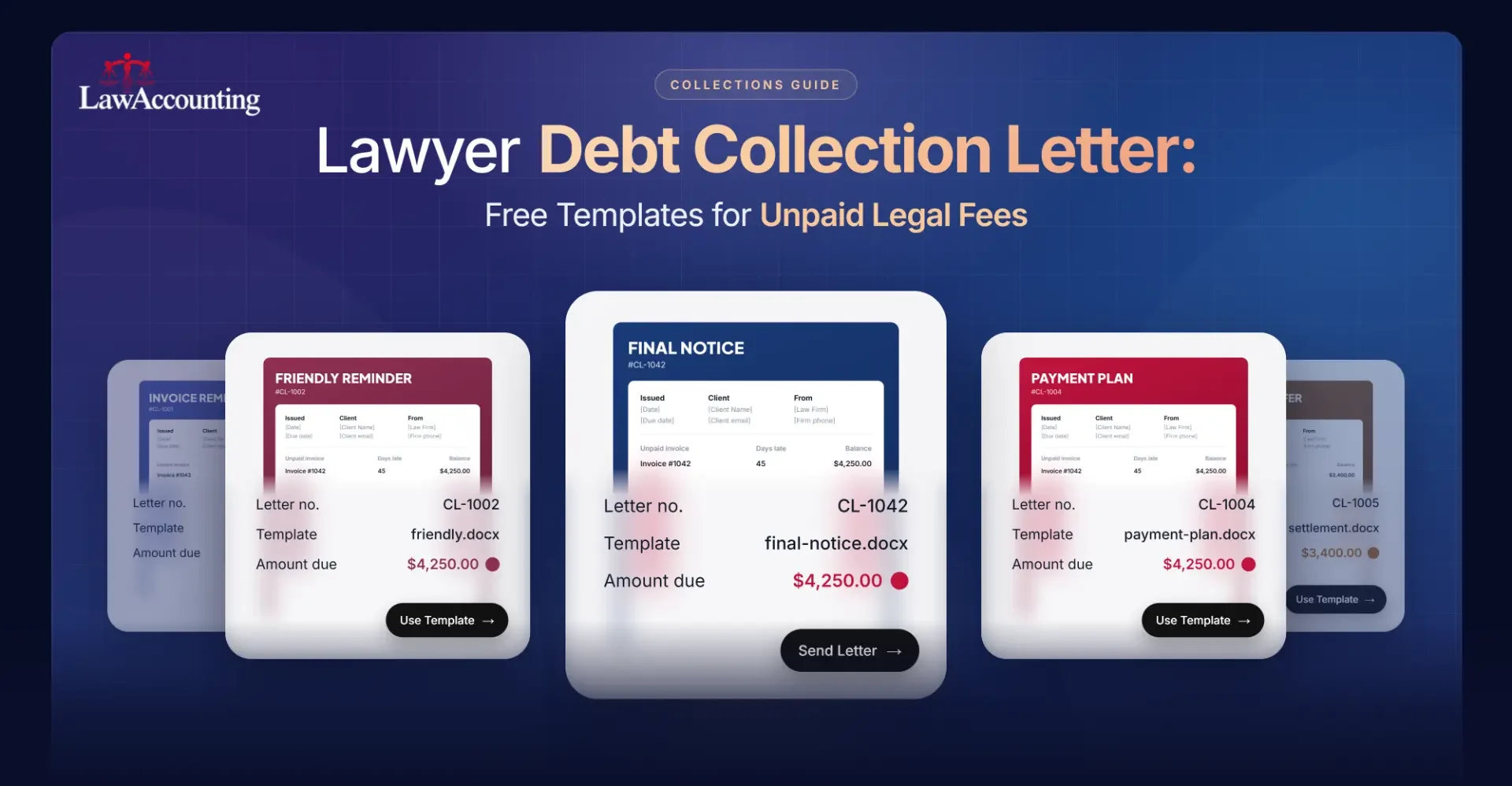
Lawyer Debt Collection Letter Templates
Adapt these templates to your firm, your client, and your state's rules. Replace everything in brackets.
Template 1: Friendly Payment Reminder
Template 2: Second Notice for Unpaid Legal Fees
Template 3: Payment Plan Offer Letter
Template 4: Final Notice Letter for Unpaid Legal Fees
Ethics Rules for Collecting Unpaid Legal Fees
Collecting fees from your own clients comes with professional rules that don't apply to most businesses. This section is general information, not legal advice, so check your state's rules before sending a final notice.
Client Confidentiality When Collecting Fees
The duty of confidentiality still applies when a client owes you money. ABA Model Rule 1.6 allows a lawyer to reveal information relating to a representation to establish a claim in a controversy between the lawyer and the client, but only to the extent reasonably necessary. In practice, a collection letter should state the matter, the amount, and the dates, and leave out case details the client wouldn't want shared. The same care applies if you hand the account to a collection agency.
Does the FDCPA Apply to Law Firms?
Usually not, when a firm collects its own fees. The federal Fair Debt Collection Practices Act mainly governs debt collectors, meaning those who collect consumer debts owed to someone else. A firm collecting its own legal fees is generally acting as the creditor. The picture changes if your firm regularly collects consumer debts for clients, because the Supreme Court held in Heintz v. Jenkins (1995) that lawyers who regularly do that can be debt collectors under the Act. Some states, such as California, also have collection laws that cover creditors collecting their own debts. Check your state's rules.
Fee Arbitration Before Suing a Client
Many state bars run fee dispute programs, and some states require you to offer arbitration before suing. California, for example, requires lawyers to give clients notice of their right to fee arbitration before filing a lawsuit for fees, and New York has a mandatory arbitration program for many fee disputes. Know your state's rule before your final notice threatens legal action. Suing a client can also prompt a malpractice counterclaim, so weigh the amount owed against that risk.
Can You Use Trust Funds to Pay an Unpaid Invoice?
Only for fees that are earned, properly billed, and not disputed. If the client disputes the bill, ABA Model Rule 1.15(e) requires the disputed portion to stay in trust until the dispute is resolved, while any undisputed amount should be paid out promptly. Moving disputed money from trust to operating, even money you believe you earned, is a serious trust violation. Make sure your engagement letter explains how retainer funds held in trust are applied to invoices.
Can a Law Firm Charge Interest on Unpaid Fees?
Yes, if the client agreed to it in advance, usually in the engagement letter, and the rate is allowed under your state's law. Adding interest or late fees that weren't agreed to at the start is likely to cause a dispute and can raise ethics concerns. If you want the option, put your payment terms, due dates, and any interest rate in writing before work begins. Our guide to building an engagement letter and fee agreement workflow covers the terms that hold up if a fee is later disputed.
Collecting From Business Clients vs Individuals
Business clients often pay late for reasons that have nothing to do with willingness. The invoice may have gone to the attorney contact instead of accounts payable, or be stuck in an approval queue. Before sending a second notice, confirm who processes payments, whether the invoice needs a purchase order or matter number, and whether it meets the client's billing guidelines.
Individuals are more likely to be facing a cash problem, so the payment plan letter usually works better for them than a firm final notice. In both cases, a phone call before the final notice often resolves more than another letter would.
When to Write Off Unpaid Legal Fees
Write off a balance when the cost of collecting it is more than you're likely to recover, or when the client has clearly stopped responding after your final notice. Keep copies of every letter and response first, since they support the write-off and any later collection effort. Our guide on how to write off bad debt at your law firm explains how to record it correctly.
Track Unpaid Invoices in LawAccounting
Collection letters work best when you know exactly which invoices are overdue and by how long, without pulling reports by hand. LawAccounting's AR aging and client statement tools show unpaid invoices by client and matter, and its client payment portal lets clients pay by card or ACH from a link in your letter. For clients who need more time, payment plans and installment billing can be set up directly in the system.
Frequently Asked Questions
How many collection letters should a law firm send?
Most firms send three or four: a friendly reminder, a second notice, a payment plan offer if needed, and a final notice. Sending them on a fixed schedule, about every two to four weeks, keeps the process consistent and creates a clear record.
Should a collection letter be sent by email or certified mail?
Use email for early reminders, since it's faster and easier for clients to act on. Send the final notice by both email and certified mail with return receipt, so you have proof the client received it.
Who should sign a law firm collection letter?
Billing staff can sign early reminders. The responsible attorney should sign the payment plan offer and the final notice, since those letters carry more weight coming from the lawyer the client worked with.
Can a law firm stop working for a client who hasn't paid?
Often, yes. ABA Model Rule 1.16 allows a lawyer to withdraw when a client fails to meet their obligations to the lawyer after being warned that the lawyer will withdraw. If the matter is in litigation, you'll usually need the court's permission, and you must take steps to protect the client's interests when you leave.
Can a law firm send unpaid fees to a collection agency?
Yes, in most states, but confidentiality rules still apply. Share only the information the agency needs to collect, choose an agency that follows debt collection laws, and check your state bar's ethics opinions, since some states have specific guidance.