Family Law Software Built for Law Firms

Manage family law matters, retainers, trust funds, billing, expenses, documents, and financial reporting in one connected legal platform.

Family Law Software for Law Firms | Family Law Billing | Trust Accounting | Matter-Level Financials

Family law software for law firms dashboard

What Family Law Practice Involves

Family law matters run long and get paid in pieces. A client pays a retainer up front, the firm draws against it as work is done, and when it runs low the client has to top it up before work continues.

That money sits in trust until it's earned. Every draw has to be recorded, every balance has to be right, and anything unearned goes back to the client when the matter closes. Meanwhile the client is going through a divorce or a custody fight and their finances are already strained.

The common failure is quiet. A trust balance runs to zero, nobody notices, the firm keeps working, and by the time anyone checks there's a month of unbilled time and a client who can't pay for it.

So family law software has to do two jobs. Run the matter, and keep the money accurate over the two years it takes to finish.

Family Law Software Key Features

Matter and Party Management

Divorce, custody and support matters involve more people than the client. Track parties, opposing counsel, guardians ad litem, evaluators and their relationships to each other on the matter record, with case details held in one place rather than across a file and someone's notes.

Document Storage and Organization

Financial disclosures, custody agreements, court filings and correspondence are stored against the matter with OCR and tagging for full-text search, version history and rollback. Role-based permissions keep sensitive files restricted to the people who should see them.

Task and Deadline Tracking

Hearing dates, mediation sessions and filing deadlines are tracked with automated reminders, assigned to the person responsible rather than sitting on a shared calendar. Tasks stay attached to the matter, so a handover between team members doesn't lose them.

Billing and Retainer Management

Retainers are held against the client's trust ledger and drawn down as invoices are approved, so the balance reflects work actually billed. Hourly, flat fee, retainer and hybrid arrangements run in the same system, with pre-bill review before a statement goes to the client.

Secure Document Sharing

Share links carry expiry dates and password protection, so a financial disclosure sent to opposing counsel doesn't stay open indefinitely. Access is controlled per document and logged, which matters when a file holds financial records or custody evaluations.

Case Timeline Visibility

Family law matters run for years and their history matters. See case progress, key dates and milestones across the life of the matter, alongside what has been billed and what remains in trust.

Trust Accounting for Family Law Firms

A family law firm's trust account is busier than most. Money comes in as retainers, moves out as fees are earned, gets topped up, and has to be returned when a matter ends.

What's built in

Client and matter-level trust ledgers

Every client's balance tracked separately against their matter.

IOLTA workflows

Deposits, draws, transfers and refunds follow trust rules by default.

Three-way reconciliation

Bank balance, trust ledger and client ledger totals matched in one view.

Trust transfers with approvals

Trust-to-operating movements carry an approval trail.

Overdraft and commingling alerts

Flagged before the transaction posts, not after.

Trust reports and audit logs

State bar trust reports and activity logs generated from live data.

Where AI Does the Work

AI matches bank transactions to ledger entries during reconciliation and flags unusual activity in receivables and payables. It catches time entries that were never recorded before a bill goes out, which matters on matters that run for years and where unbilled work is the first thing to get lost. It reads and tags documents as they arrive, so disclosures and filings land against the right matter. And it answers questions about your ledger in plain English, so a partner asking what a client still has in trust doesn't wait on a report.

AI output in this platform is a suggestion, not a decision. Every AI-assisted entry goes through the same review, approval and audit trail as anything entered by hand, and your team makes the final call.

One Platform, Four Products

LawAccounting is the financial core of the suite. The other products handle the work around the matter.

CaseQube

Case and matter management

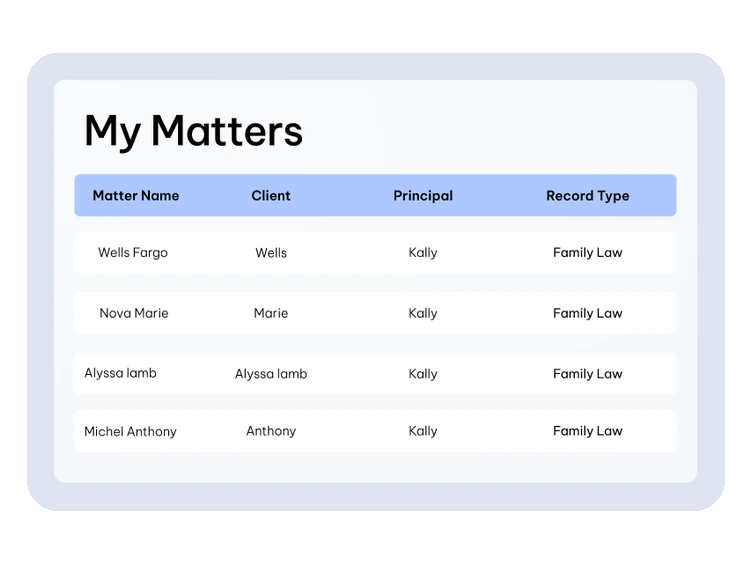
Matters, parties, tasks, hearing dates and deadlines across long-running cases.

Explore CaseQube
CaseQube My Matters table listing matters with client, principal and record type

CloudDoc

Document management

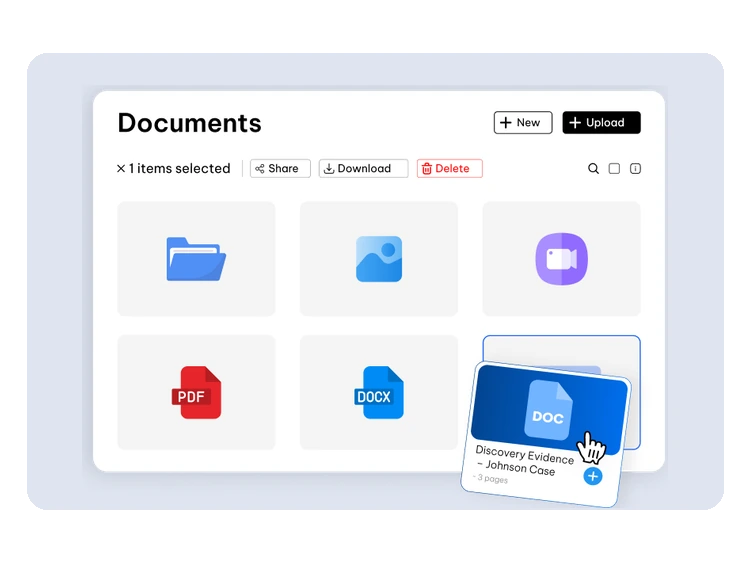
Financial disclosures, custody agreements, court filings and correspondence.

CloudDoc Documents panel with folders, PDF and Word files, and a case document being dragged inExplore CloudDoc

LawAccounting

Accounting, billing and trust

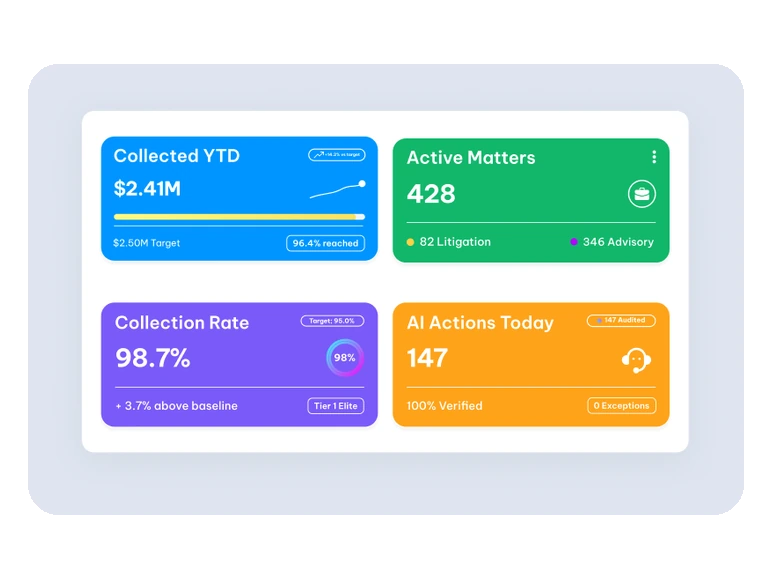
Retainers, client trust ledgers, matter billing, case costs, reconciliation and reporting.

LawAccounting dashboard cards showing fees collected year to date, active matters, collection rate and AI actionsExplore LawAccounting

Maahi

Payments

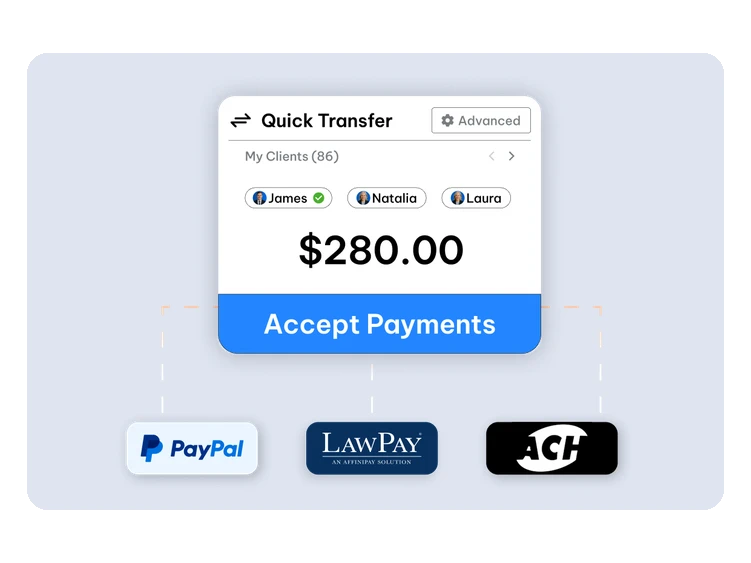
Card and ACH collection, invoicing and transaction tracking, posted to the client ledger.

Maahi Quick Transfer panel accepting a client payment by PayPal, LawPay or ACHExplore Maahi

Adopt one product or all four. Each runs on its own.

Frequently Asked Questions

Family law software helps firms manage the work involved in matters such as divorce, custody, support, and other family law proceedings. It can include matter management, tasks, documents, time tracking, billing, client communication, and financial management.

For firms using LawAccounting, the financial side includes billing, trust accounting, expenses, receivables, and reporting.

Family law billing software helps firms record time and expenses, manage billing arrangements, issue invoices, track payments, and monitor receivables.

LawAccounting supports hourly, flat-fee, retainer, contingency, and hybrid billing, with billing customization at the client and matter level.

Trust accounting for family law firms is the process of recording and managing client funds held separately from the firm's operating funds.

LawAccounting provides client-level trust ledgers, IOLTA-compliant workflows, and three-way reconciliation between the bank, client ledger, and trust ledger.

Retainer management involves tracking money received from a client, the work billed against the matter, and the remaining financial balance.

LawAccounting supports retainer billing and client- and matter-level financial tracking, keeping the billing activity connected to the firm's accounting records.

A client trust ledger records the financial activity associated with funds held in trust for a specific client.

LawAccounting provides segregated client trust ledgers with client-level balances, so firms can track trust activity without combining client funds with operating funds.

Three-way reconciliation compares the bank balance, client ledger, and trust ledger.

LawAccounting automates this matching process so firms can reconcile trust activity across all three records rather than relying on separate spreadsheets.

Yes. LawAccounting supports matter-level expense tracking and distinguishes between hard and soft costs. Vendor and expense information can remain connected to the matter's financial record.

Yes. LawAccounting supports hourly, flat-fee, contingency, retainer, and hybrid billing, with per-client and per-matter customization.

LawAccounting includes Balance Sheet, P&L, Trial Balance, Client Ledger, AR Aging, WIP, realization, originations, and custom dashboards.

Bring Your Family Law Financials Into One System

Manage retainers, trust accounting, matter billing, case costs, and reporting in a legal accounting platform built for law firms.