Employment Law Firm Software for Billing, Trust and Collections

Manage hourly, contingency and LEDES billing, retainers, settlement funds, case costs and receivables for plaintiff and defense work in one connected legal platform.

Employment Law Billing Software | Hourly and Contingency Billing | LEDES Billing | Trust Accounting for Employment Settlements

Employment law billing and trust accounting in LawAccounting

What Employment Law Practice Involves

Employment firms get paid differently depending on which side they represent. Plaintiff firms usually work on contingency, and some statutes, including Title VII and the Fair Labor Standards Act, let a winning employee recover attorney fees from the employer. Defense firms bill employers by the hour, and when an employment practices liability insurer is paying, it may set billing guidelines and expect LEDES invoices.

Many firms also advise employers on handbooks, policies and HR questions under flat fees or ongoing retainers, and plenty do all three. That puts contingency settlements, hourly defense bills, insurer invoices and monthly retainers in the same set of books. Most employment law software focuses on intake and deadlines and leaves the money to a separate system.

What LawAccounting Handles on an Employment Law Matter

Hourly and Contingency Billing

Set the fee arrangement on each matter, whether it's hourly, contingency, flat fee, retainer or a hybrid of them. Split, blended and tiered structures are available, and every invoice goes through pre-bill review before it reaches the client.

LEDES Billing for Employment Defense

Invoices export as LEDES 1998B or LEDES XML 2.0, with UTBMS task and activity codes applied when time is entered. Rates and billing rules are set per client and per matter, so each insurer's or employer's terms apply to the matters that belong to them.

Retainer and Recurring Billing

Advance retainers sit in the client's trust ledger and move to operating with an approval trail as fees are earned. For ongoing advisory work, billing entries can be saved as recurring records instead of rebuilt every month.

Trust Accounting for Employment Settlements

Settlement funds are held in client and matter-level trust ledgers, so each client's balance is tracked on its own. Overdraft and commingling alerts flag a problem before the transaction posts.

Matter-Level Cost Tracking

Filing fees, deposition costs and expert invoices are recorded against the matter as hard or soft costs, with vendor bills, approvals and payment runs behind them. Cost advances and client reimbursements are tracked apart from costs the firm absorbs.

Accounts Receivable and Collections

AR aging shows what each client and matter owes, with automated reminders and collections workflows tied to the matter record. Realization reporting shows the gap between what was billed and what was collected.

Billing and Trust Accounting for Employment Law Firms

An employment firm can run a contingency case, an insurer-paid defense and a monthly advisory retainer in the same week. Each one gets paid differently, and all of them land in the same general ledger.

What's built in

Billing set per matter

Hourly, contingency, flat fee, retainer and hybrid arrangements on the same platform.

LEDES 1998B and LEDES XML 2.0

Electronic invoices with UTBMS codes for insurers and corporate clients.

Pre-bill review and approval

Attorneys check narratives, codes and write-downs before anything goes out.

Client and matter-level trust ledgers

Settlement funds and advance retainers tracked separately for every client.

Earned fee transfers and three-way reconciliation

Trust-to-operating movements carry an approval trail, and bank, trust ledger and client ledger totals are compared in one view.

AR aging and collections

Outstanding balances by client and matter, with automated reminders.

How the money moves on each type of matter

  1. 01

    Plaintiff matters

    The contingency arrangement is set on the matter. Settlement funds post to the client's trust ledger, the earned fee and reimbursed costs move out with an approval trail, and the client's share is disbursed. If the court awards attorney fees separately, that payment posts against the same matter.

  2. 02

    Defense matters

    Time is captured with UTBMS codes and assembled into a pre-bill using the rates set for that client. Once the attorney approves it, the invoice goes to the employer or exports as a LEDES file for the insurer. Payments and any reductions post against the matter, and the rest moves into AR aging.

  3. 03

    Advisory matters

    Flat fees or retainers are set on the client. Advance retainers are held in trust and transferred as earned, recurring billing entries cover ongoing work, and anything unpaid shows up in receivables.

Three kinds of work, one general ledger, and reports you can filter by client, matter and attorney.

Where AI Does the Work

AI matches incoming payments to open invoices during reconciliation, which saves time when payments arrive from employers, insurers and individual clients on different schedules. It flags unusual activity in receivables and payables. CloudDoc reads and tags documents as they arrive, so personnel files, pay records and agency correspondence are filed to the right matter. And you can ask questions about your ledger in plain English, so a partner who wants to know what's outstanding across defense clients gets an answer without waiting on a report.

AI output in this platform is a suggestion, not a decision. Every AI-assisted entry goes through the same review, approval and audit trail as anything entered by hand, and your team makes the final call.

One Platform, Four Products

LawAccounting is the financial core of the suite. The other products handle the work around the matter.

CaseQube

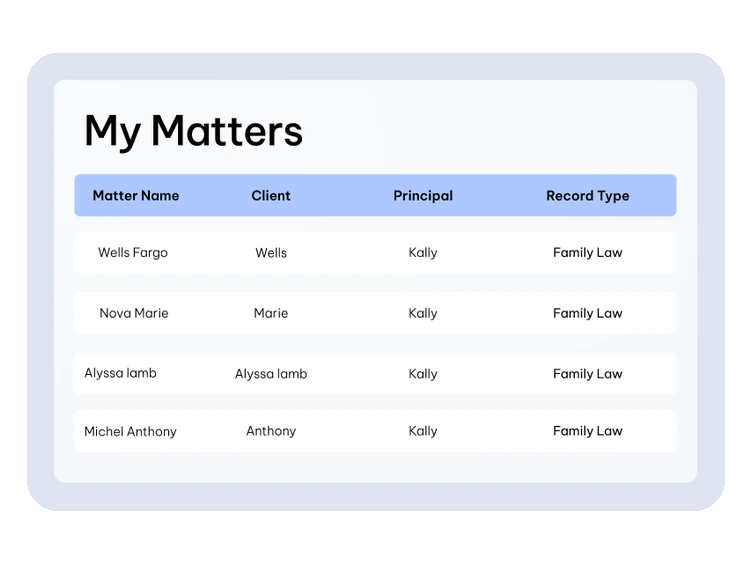
Case and matter management

Intake, conflict checks, matters, tasks and deadlines across plaintiff and defense work.

Explore CaseQube
CaseQube My Matters table listing matters with client, principal and record type

CloudDoc

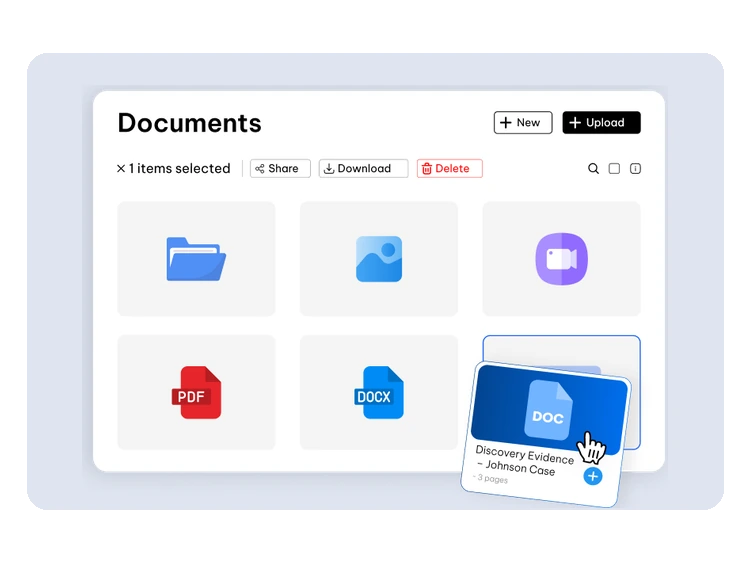
Document management

Personnel files, pay records, agency filings and settlement agreements, with role-based permissions and secure sharing.

CloudDoc Documents panel with folders, PDF and Word files, and a case document being dragged inExplore CloudDoc

LawAccounting

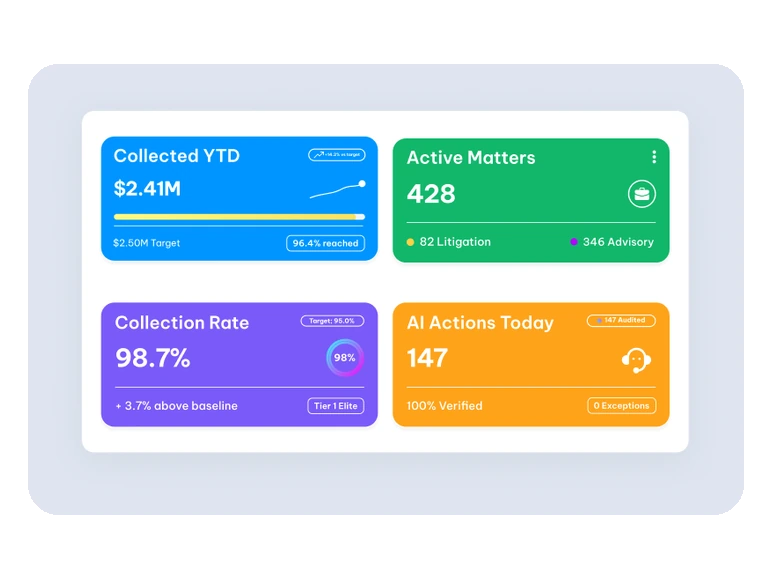
Accounting, billing and trust

Hourly, contingency and LEDES billing, retainers, trust ledgers, case costs and receivables.

LawAccounting dashboard cards showing fees collected year to date, active matters, collection rate and AI actionsExplore LawAccounting

Maahi

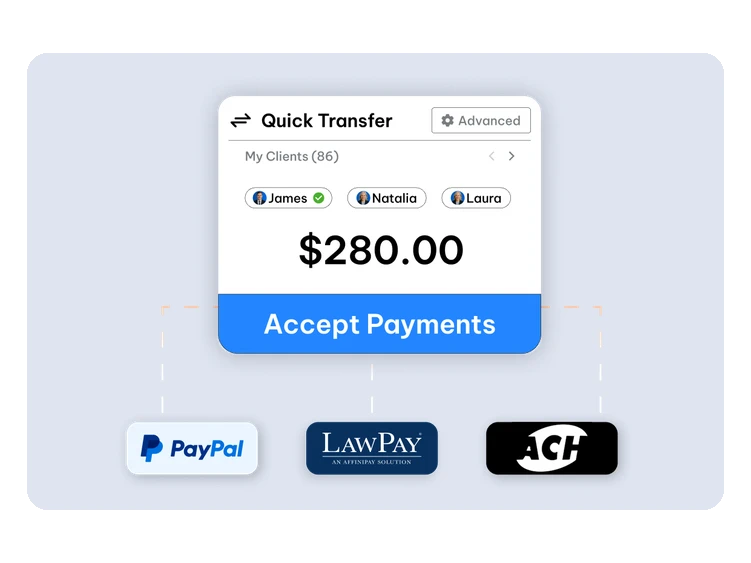
Payments

Card and ACH collection, invoicing and transaction tracking, posted to the client ledger.

Maahi Quick Transfer panel accepting a client payment by PayPal, LawPay or ACHExplore Maahi

Adopt one product or all four. Each runs on its own.

Frequently Asked Questions

Software that helps employment firms run their matters and the money attached to them: intake, deadlines, documents, billing, trust accounting and collections.

LawAccounting's connected suite covers case management, document management, legal billing, trust accounting, payments and financial reporting in one system.

Billing software built for the mix of fee arrangements employment firms use. It handles contingency cases, hourly defense work, insurer billing requirements and advisory retainers.

LawAccounting supports hourly, flat fee, contingency, retainer and hybrid billing, set at the client and matter level, with LEDES and UTBMS for insurers and corporate clients.

Software that lets a firm bill some matters by the hour and others as a percentage of the recovery, or combine both on one matter.

LawAccounting supports hourly, contingency and hybrid arrangements alongside flat fee and retainer billing, plus split, blended and tiered structures.

It depends on the side. Plaintiff firms usually work on contingency and are paid from settlements or awards. Defense firms bill employers hourly, sometimes through an employment practices liability insurer. Advisory work for employers is often billed as a flat fee or ongoing retainer.

LawAccounting handles all of these in the same general ledger, with each arrangement set on its own matter.

LEDES is a file format insurers and corporate legal departments use to receive invoices electronically, with each line of time and expense coded using UTBMS task and activity codes.

LawAccounting exports invoices as LEDES 1998B or LEDES XML 2.0, built from the same time and expense records in your ledger.

Yes. Rates and billing rules are set per client and per matter, so each insurer's or employer's terms apply to the matters that belong to them.

It's billing for ongoing work, such as HR counseling or policy reviews, on a regular schedule instead of matter by matter.

In LawAccounting, billing entries can be saved as recurring records, and advance retainers are held in trust and transferred to operating as fees are earned.

It's the process of holding settlement funds and advance retainers in a trust account, separate from the firm's own money, until fees, costs and the client's share are paid out.

LawAccounting provides client and matter-level trust ledgers, IOLTA workflows, overdraft and commingling alerts, and three-way reconciliation.

A client trust ledger records every deposit and payment made from trust for one client.

LawAccounting keeps a separate trust ledger for each client and matter, so balances never mix and each one reconciles against the bank.

Three-way reconciliation compares the bank balance, the trust ledger and the total of all client ledgers. All three should match.

LawAccounting shows all three in one view, so trust reconciliation doesn't depend on a spreadsheet.

Some employment statutes, including Title VII and the FLSA, allow a prevailing employee to recover reasonable attorney fees from the employer. The court decides the amount, and it may be paid separately from the client's recovery.

LawAccounting records that payment against the matter, alongside the rest of the matter's billing and trust activity.

Yes. Costs are recorded against the matter as hard or soft costs, with vendor bills, approvals and payment runs behind them. Cost advances and client reimbursements are tracked separately from costs the firm absorbs.

LawAccounting shows AR aging by client and matter, sends automated reminders, and runs collections workflows tied to the matter record. Realization reporting shows billed against collected.

Yes. Reports show fees, costs, WIP, realization and effective rate by matter, attorney and practice group, with budget versus actual at the matter level and drill-down to each transaction.

Software that organizes the matters themselves: intake, conflict checks, deadlines, tasks, documents and client communication.

In the LawAccounting suite, that work is handled by CaseQube, which connects to LawAccounting so each matter's finances stay tied to the case.

No. LawAccounting is a full double-entry general ledger with trust accounting, accounts payable, accounts receivable and financial statements, and it supports migration from QuickBooks.

Both. LawAccounting runs on Salesforce and can be used on its own, with CaseQube, or alongside other practice management systems.

Bring Plaintiff, Defense and Advisory Billing Into One System

Manage contingency settlements, hourly and LEDES billing, retainers, trust accounting and collections in legal accounting software made for law firms.