Real Estate Law Firm Software for Closings, Escrow and Trust Accounting

Manage flat fee closings, escrow deposits, closing disbursements, trust reconciliation and matter reporting in one connected legal platform.

Real Estate Law Billing Software | Flat Fee Billing | Trust Accounting for Real Estate Closings | Escrow Accounting

Real estate closing trust accounting in LawAccounting

What Real Estate Law Practice Involves

Real estate firms handle purchases, sales, refinances and leases for buyers, sellers, lenders and businesses, and many also take on property disputes. Residential closings are usually billed as a flat fee, while commercial deals, leases and disputes are more often billed hourly.

In states where attorneys run closings, the firm's trust account sits in the middle of every deal. Earnest money and closing funds come in, and seller proceeds, mortgage payoffs, commissions and closing costs go out, often on the same day and for several closings at once. Most real estate law software focuses on documents and deadlines and treats the trust account as one feature among many.

What LawAccounting Handles on a Real Estate Matter

Flat Fee Billing for Closings

Set a flat fee on each closing and bill it when the work is done, with hourly and hybrid billing for commercial deals, leases and disputes. Pre-bill review comes before every invoice, and batch invoicing handles a week of closings in one run.

Trust Accounting for Real Estate Closings

Every closing gets its own client and matter-level trust ledger, so one deal's funds never mix with another's. Overdraft and commingling alerts flag a problem before the transaction posts.

Escrow Accounting for Law Firms

Earnest money and escrow deposits are held against the matter until closing, with every deposit and release recorded on the ledger. Firms can run more than one trust account, each connected by bank feed and reconciled on its own.

Closing Disbursement Tracking

Each payment out of trust posts against the closing's ledger, whether it's seller proceeds, a mortgage payoff, a commission or a closing cost. The firm's fee moves to operating with an approval trail, so every transfer has a record behind it.

Three-Way Trust Reconciliation

Bank balance, trust ledger and client ledger totals are compared in one view, with trust and operating accounts reconciled separately. Daily bank feeds and AI-assisted matching pair transactions with ledger entries, so reconciliation keeps up with closing volume.

Matter Profitability Reporting

Reports show fees, WIP, realization and effective rate by matter, attorney and practice group, with drill-down to each transaction. On flat fee closings, effective rate shows whether the fee still covers the work.

Trust Accounting for Real Estate Closings

A closing can move hundreds of thousands of dollars through the firm's trust account in a single afternoon. Every dollar in has to match a dollar out, on the right ledger.

What's built in

Client and matter-level trust ledgers

A separate balance for every closing, tracked against its matter.

IOLTA workflows

Deposits, transfers and disbursements handled under trust rules from the start.

Multiple trust and operating accounts

Each account connected by bank feed and reconciled on its own.

Overdraft and commingling alerts

Raised before a transaction posts, so a disbursement can't quietly exceed what's on the ledger.

Earned fee transfers with approvals

The firm's fee moves from trust to operating with a recorded approval trail.

Trust reports and audit trail

State bar trust reports and a full transaction history from live data.

How money moves through a closing

  1. 01

    Deposit received

    Earnest money or an escrow deposit posts to the closing's trust ledger.

  2. 02

    Closing funds arrive

    The buyer's funds and any lender funds post to the same ledger, and the bank feed picks up each deposit for reconciliation.

  3. 03

    Balance checked

    Overdraft alerts flag any disbursement that would take the ledger below zero before it posts.

  4. 04

    Disbursements made

    Seller proceeds, mortgage payoffs, commissions and closing costs are paid from trust and posted to the ledger.

  5. 05

    Fee earned

    The firm's fee transfers to operating with an approval trail.

  6. 06

    Ledger closed

    The closing's ledger reaches zero, and bank, trust ledger and client ledger totals agree.

Run that for twenty closings in a week and the trust account becomes the busiest account the firm has.

Settlement statements and title work stay in the closing software built for them. LawAccounting keeps the trust and accounting records behind every closing.

Where AI Does the Work

AI matches bank transactions to ledger entries during reconciliation, which saves time when deposits and disbursements for several closings clear on the same day. It flags unusual activity in receivables and payables. CloudDoc reads and tags documents as they arrive, so purchase agreements, leases and closing files are filed to the right matter. And you can ask questions about your ledger in plain English, so a partner who wants to know how much is sitting in trust across open closings gets an answer without waiting on a report.

AI output in this platform is a suggestion, not a decision. Every AI-assisted entry goes through the same review, approval and audit trail as anything entered by hand, and your team makes the final call.

One Platform, Four Products

LawAccounting is the financial core of the suite. The other products handle the work around the matter.

CaseQube

Case and matter management

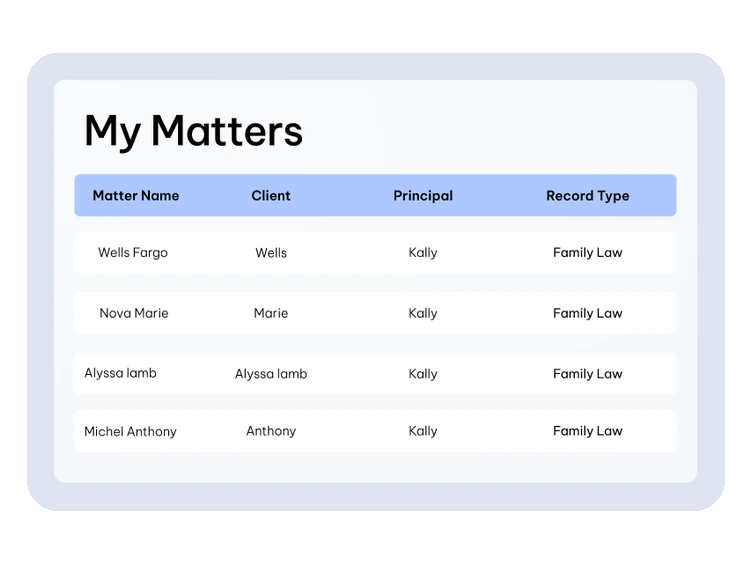
Intake, conflict checks, matters, tasks and closing deadlines.

Explore CaseQube
CaseQube My Matters table listing matters with client, principal and record type

CloudDoc

Document management

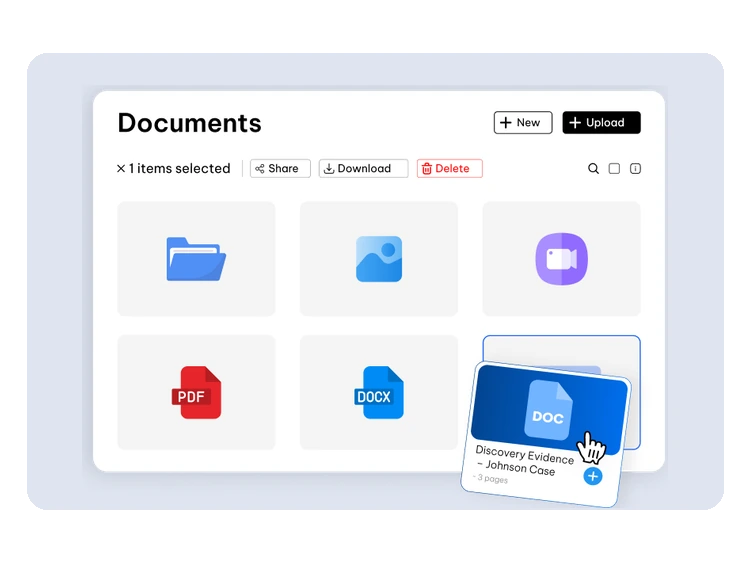
Purchase agreements, leases, title documents and closing files, with templates, version history and e-signature.

CloudDoc Documents panel with folders, PDF and Word files, and a case document being dragged inExplore CloudDoc

LawAccounting

Accounting, billing and trust

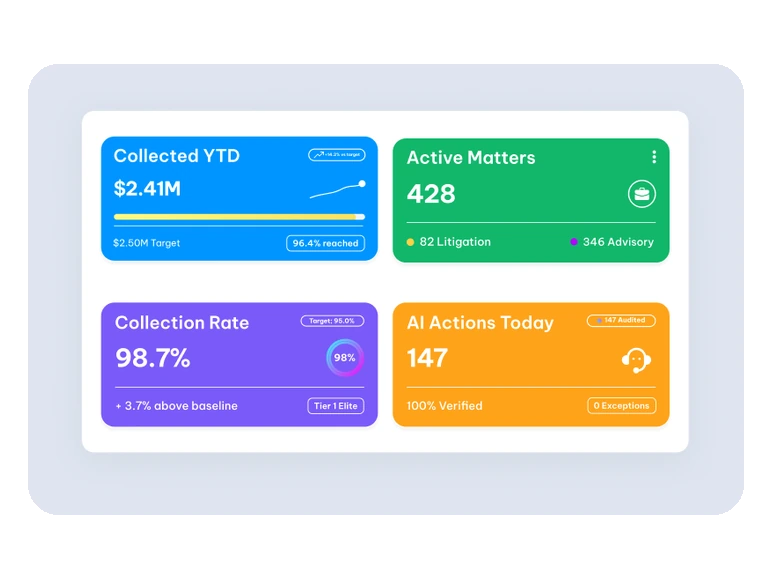
Flat fee billing, escrow and trust ledgers, closing disbursements, reconciliation and reporting.

LawAccounting dashboard cards showing fees collected year to date, active matters, collection rate and AI actionsExplore LawAccounting

Maahi

Payments

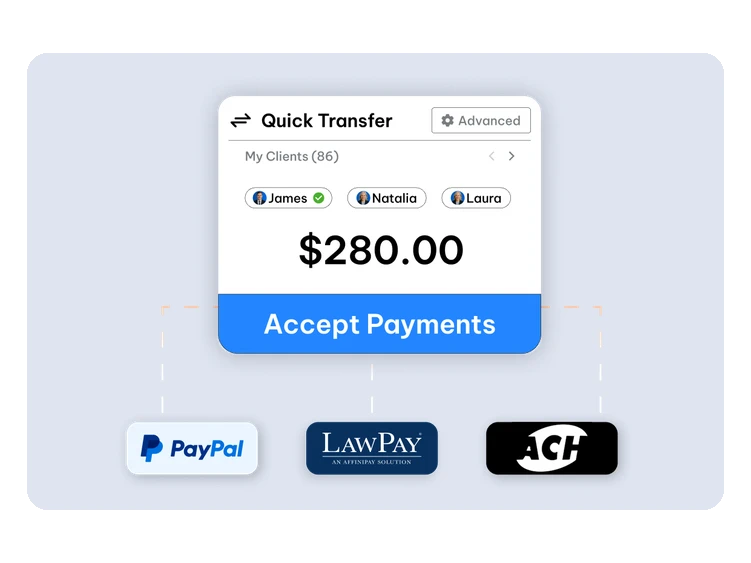
Card and ACH collection, invoicing and transaction tracking, posted to the client ledger.

Maahi Quick Transfer panel accepting a client payment by PayPal, LawPay or ACHExplore Maahi

Adopt one product or all four. Each runs on its own.

Frequently Asked Questions

Software that helps real estate firms run their matters and the money attached to them: intake, deadlines, documents, billing, escrow and trust accounting.

LawAccounting's connected suite covers case management, document management, legal billing, trust accounting, payments and financial reporting in one system.

Billing software built for how real estate firms charge: flat fees for closings and hourly work for commercial deals, leases and disputes.

LawAccounting supports flat fee, hourly, retainer and hybrid billing, set at the client and matter level, with batch invoicing for high closing volume.

Software that bills a set price for a defined piece of work instead of tracking every hour against the invoice.

LawAccounting supports flat fee billing alongside hourly, retainer, contingency and hybrid arrangements, and effective rate reporting shows whether a flat fee covers the time spent.

Residential closings are usually billed as a flat fee, often paid from the closing funds. Commercial transactions, leases and disputes are more often billed hourly.

LawAccounting sets the arrangement on each matter, and when the fee is paid from trust, it moves to operating with an approval trail.

It's the process of holding closing funds in a trust account, separate from the firm's own money, and recording every deposit and disbursement against the right closing.

LawAccounting provides client and matter-level trust ledgers, IOLTA workflows, overdraft and commingling alerts, and three-way reconciliation.

It's how a firm records money it holds for a transaction, such as an earnest money deposit, until the conditions for releasing it are met. Depending on the state and the deal, those funds are held in the firm's trust or escrow account.

In LawAccounting, escrow deposits are held against the matter's trust ledger, and every deposit and release is recorded.

A client trust ledger records every deposit and payment made from trust for one client or matter.

In a real estate practice, that usually means one ledger per closing. LawAccounting keeps each one separate, so funds never mix and every ledger reconciles against the bank.

Each payment out of trust is recorded against the closing's ledger as it happens: seller proceeds, mortgage payoffs, commissions, closing costs and the firm's fee.

The full sequence shows in LawAccounting's trust reports and general ledger.

Three-way reconciliation compares the bank balance, the trust ledger and the total of all client ledgers. All three should match.

LawAccounting shows all three in one view, which matters when several closings move through the same trust account each week.

LawAccounting's overdraft and commingling alerts flag the transaction before it posts, so the issue can be fixed before money leaves the account.

Yes. LawAccounting supports multiple trust and operating accounts, each connected by bank feed and reconciled separately.