Estate Planning Software Built for Law Firms

Manage wills, trusts, probate matters, flat fee and hourly billing, client trust accounts, costs and financial reporting in one connected legal platform.

Estate Planning Software for Law Firms | Will and Trust Software | Estate Planning Billing | Trust Accounting

Estate planning billing and trust accounting in LawAccounting

What Estate Planning Practice Involves

Estate planning firms do two kinds of work, and they get paid for each one differently.

The first is building the plan: wills, revocable trusts, powers of attorney and healthcare directives. Most firms sell this as a flat fee package. The client pays a set price, and the firm's margin depends on whether that price still covers the hours behind it.

The second is administration. When a client dies, the firm may handle probate for the estate or advise the trustee who takes over the trust. This work can run for many months and is often billed hourly. Depending on the state, probate fees may be set by statute or need court approval before they're paid.

Both kinds of work involve money held for clients. Depending on your state's rules, an advance fee or a flat fee paid up front may have to sit in the firm's client trust account until it's earned. Costs like court filing fees, publication notices, appraisals and recording fees get paid on the client's behalf and have to be recovered.

The common failure is quiet. A flat fee plan turns out more complicated than the price assumed, and nobody checks. An administration matter drags on with unbilled time and advanced costs that never get recovered.

So estate planning software has to do two jobs. Run the matter, and keep the money accurate whether it's a flat fee plan or a probate that takes a year to close.

Estate Planning Software Key Features

Matter and Party Management

An estate matter involves more people than the client. Track spouses, children, beneficiaries, executors, trustees, guardians and agents on the matter record, along with how they relate to each other, so nobody has to rebuild a family tree from old notes.

Document Storage and Version History

Wills, trust agreements, powers of attorney, deeds and amendments are stored against the matter, with OCR and tagging for full-text search. Version history and rollback show which version was signed and what changed when the plan was updated years later. Role-based permissions restrict sensitive files to the people who should see them.

Secure Document Sharing

Draft plans go to clients for review, and signed copies go to family members, financial advisors and fiduciaries. Share links carry expiry dates and password protection, so a copy of someone's will doesn't stay open indefinitely. Access is controlled per document and logged.

Task and Deadline Tracking

Signing meetings, plan reviews, probate filings and court dates are tracked with automated reminders. Each one is assigned to the person responsible rather than left on a shared calendar. Tasks stay attached to the matter, so a handover between team members doesn't lose them.

Flat Fee and Hourly Billing

Flat fee plans and hourly administration work run in the same system, set per client and per matter. Hourly, flat fee, retainer and hybrid arrangements are all supported. Pre-bill review happens before an invoice goes out, and batch invoicing handles firms that send many statements at once.

Matter Costs and Profitability Reporting

Filing fees, appraisals, recording fees and other costs are recorded against the matter. Hard and soft costs are tracked separately, and client cost advances are kept apart from firm expenses. Profitability reports by matter, attorney and practice group show whether a flat fee package still covers the time behind it.

Billing and Trust Accounting for Estate Planning and Probate

Most estate planning software is built around drafting the plan. What happens to the fee, the advance and the costs afterwards is left to a separate accounting system.

What's built in

Flat fee, hourly and hybrid billing

Flat fee plans and hourly administration set per client and per matter.

Client and matter-level trust ledgers

Advance fees and other client funds held in trust, tracked separately for every client and matter.

Earned fee transfers with approvals

Trust-to-operating movements recorded with an approval trail as work is completed.

Three-way reconciliation

Bank balance, trust ledger and client ledger totals matched in one view.

Trust balance monitoring

Overdraft and commingling alerts on every client trust balance.

Cost advances and reimbursements

Costs paid on a client's behalf tracked separately from firm expenses until they're recovered.

How the fee reaches the firm

  1. 01

    Estate plans

    The plan is usually sold as a flat fee. If the client pays up front and your state requires it, the payment is held in trust and moves to operating as the work is completed, with an approval trail. Profitability reporting shows whether the package price still covers the work.

  2. 02

    Probate and estate administration

    Time and costs are recorded against the matter as the estate is administered. Where fees need court approval, the billing records behind the request are already assembled, and the approved amount posts back against the same matter. Advanced costs stay visible until they're reimbursed.

  3. 03

    Trust administration

    Work for a trustee is often billed hourly against its own matter, separate from the original plan. The firm can see what the administration work cost and what it collected.

Where AI Does the Work

AI matches bank transactions to ledger entries during reconciliation and flags unusual activity in receivables and payables, which matters when the firm holds client funds in trust across many matters. It catches time entries that were never recorded before a bill goes out, so hours on a long administration matter aren't lost. It reads and tags documents as they arrive, so signed plans, deeds and court notices land against the right matter. And it answers questions about your ledger in plain English, so a partner asking whether last year's flat fee plans covered their cost doesn't wait on a report.

AI output in this platform is a suggestion, not a decision. Every AI-assisted entry goes through the same review, approval and audit trail as anything entered by hand, and your team makes the final call.

One Platform, Four Products

LawAccounting is the financial core of the suite. The other products handle the work around the matter.

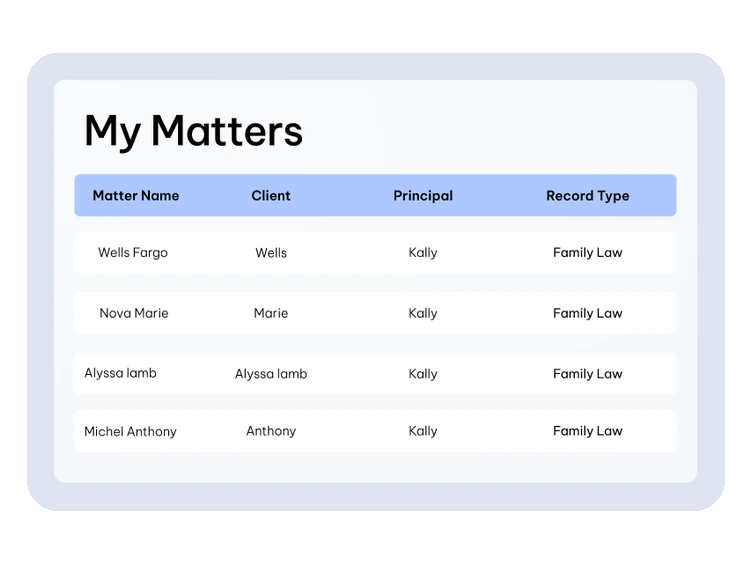
CaseQube

Case and matter management

Estate matters, family members and fiduciaries, tasks, signing meetings and probate deadlines.

Explore CaseQube
CaseQube My Matters table listing matters with client, principal and record type

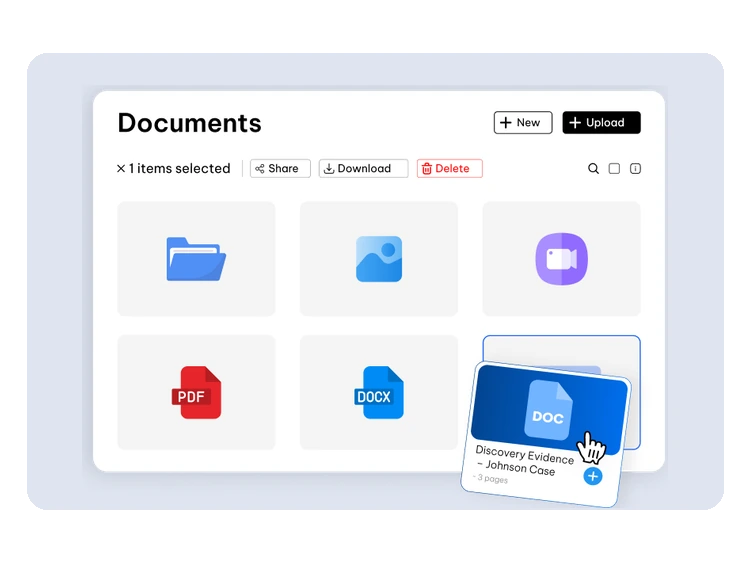
CloudDoc

Document management

Wills, trust agreements, powers of attorney, deeds and court filings, organized and searchable.

CloudDoc Documents panel with folders, PDF and Word files, and a case document being dragged inExplore CloudDoc

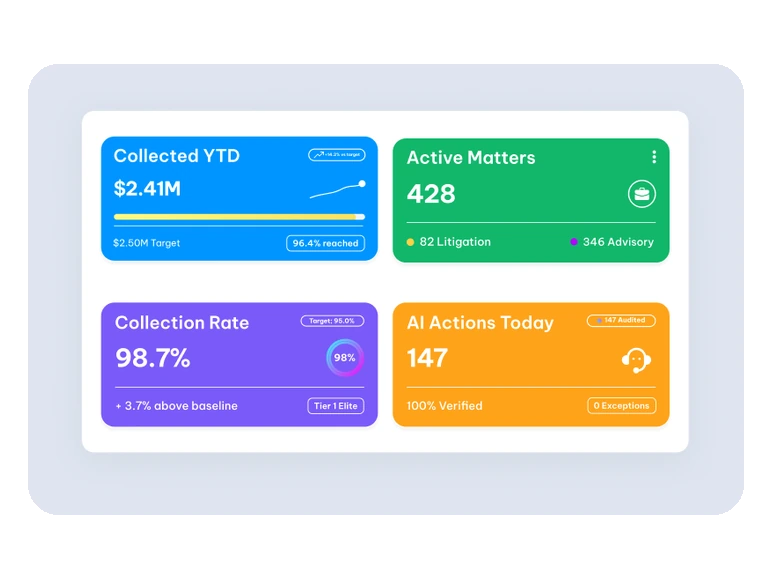
LawAccounting

Accounting, billing and trust

Flat fee and hourly billing, client trust ledgers, cost advances, reconciliation and reporting.

LawAccounting dashboard cards showing fees collected year to date, active matters, collection rate and AI actionsExplore LawAccounting

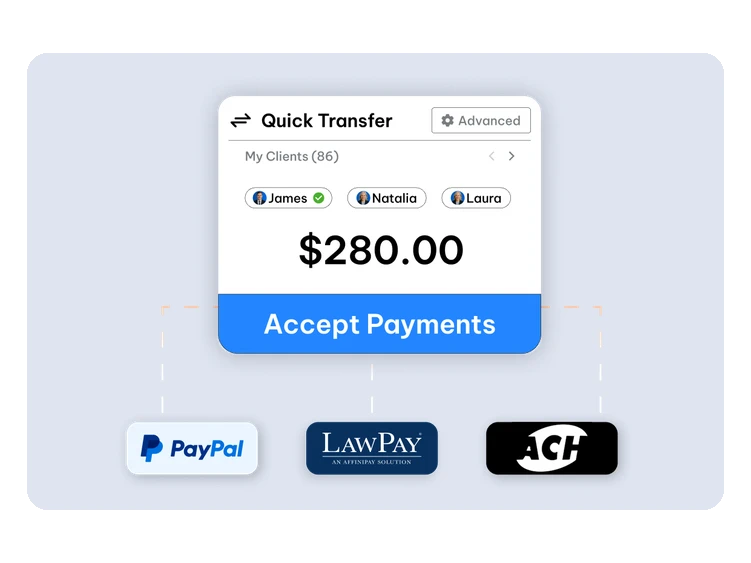
Maahi

Payments

Card and ACH collection, invoicing and transaction tracking, posted to the client ledger.

Maahi Quick Transfer panel accepting a client payment by PayPal, LawPay or ACHExplore Maahi

Adopt one product or all four. Each runs on its own.

What Law Firms Are Saying

I can't say enough about the software and the Law Accounting team. The software is fantastic and fully customizable.
Brian Belt, Law Firm Principal, Acevedo Law
CaseQube has completely transformed how we operate. The AI-driven document management features are not only intelligent but intuitive, saving my team hours every week.
Anna Shapiro, Managing Partner, Shapiro Law Firm

Frequently Asked Questions

Estate planning software helps firms manage the work behind wills, trusts, powers of attorney, probate and trust administration. It can include matter management, documents, deadlines, billing, trust accounting and financial reporting.

LawAccounting's connected suite brings case management, document management, legal billing, trust accounting, payments and financial reporting into one system.

Will and trust software is another name for estate planning software. It covers the matters, documents, billing and client funds involved in preparing wills and trusts and administering them later.

LawAccounting handles the financial side, including flat fee and hourly billing, client trust ledgers, cost tracking and reporting.

Estate planning billing software helps firms record time and costs, bill flat fee plans and hourly administration work, issue invoices and track payments.

LawAccounting supports hourly, flat fee, retainer, contingency and hybrid billing, with billing set at the client and matter level.

Yes. Flat fee billing is common for wills, trusts and estate plan packages.

LawAccounting supports flat fee billing alongside hourly, retainer and hybrid arrangements, and profitability reporting shows whether a flat fee covered the work behind it.

Probate and estate administration are often billed hourly, and in some states fees are set by statute or need court approval.

LawAccounting records time and costs against each matter, so the billing behind every invoice or fee request is already in one place.

Yes. Billing arrangements in LawAccounting are set per client and per matter, so a flat fee estate plan and an hourly probate matter for the same family run side by side.

Trust accounting for estate planning firms is the process of recording and managing client funds held in the firm's client trust account, separate from its operating funds. This is different from the trusts the firm drafts for clients.

LawAccounting provides client-level trust ledgers, IOLTA workflows and three-way reconciliation between the bank, client ledger and trust ledger.

An advance fee is held in the firm's client trust account until it's earned, depending on the state's rules.

LawAccounting tracks advance fees against the client and matter, and earned fees move from trust to operating with an approval trail.

A client trust ledger records the activity on funds held in trust for one client.

LawAccounting keeps segregated client and matter-level trust ledgers with client-level balances, so trust activity is never combined with operating funds.

Three-way reconciliation compares the bank balance, the trust ledger and the total of all client ledgers.

LawAccounting matches all three in one view, so firms don't have to reconcile trust activity in separate spreadsheets.

Yes. LawAccounting records expenses at the matter level, tracks hard and soft costs separately, and keeps client cost advances apart from firm expenses so they can be recovered.

Bring Your Estate Planning Financials Into One System

Manage flat fee plans, hourly administration, client trust accounting, costs and reporting in a legal accounting platform built for law firms.