Bankruptcy Law Firm Software Built for Law Firms

Manage bankruptcy matters, court deadlines, documents, fees, payment plans, expenses, and financial reporting in one connected legal platform.

Bankruptcy Billing Software | Flat Fee Billing | Trust Accounting | Matter-Level Financials

Bankruptcy law software for case management and billing

What Bankruptcy Practice Involves

Bankruptcy is the one practice area where the client's finances are the case. Schedules, means testing, disclosures and creditor lists all turn on getting numbers right, and the court sees every one of them.

The firm's own money works differently depending on the chapter. Chapter 7 consumer fees are usually collected in full before filing, because a fee still owed at filing becomes a debt the client can discharge. Chapter 13 fees can be paid through the plan over three to five years, with the trustee sending payments to the firm. Chapter 11 runs on fee applications the court has to approve before the firm gets paid.

Add the volume of consumer work, the deadlines around 341 meetings and plan confirmation, and the documents each case generates, and the practice needs both structure and accurate books.

Three chapters, three different ways money reaches the firm, often in the same office on the same day.

Bankruptcy Software Key Features

Financial Tracking and Reporting

Client financial data, case costs and firm revenue are tracked against the matter, with reporting that breaks down by chapter, attorney, matter or date range. Every figure drills back to the transaction behind it rather than a spreadsheet someone maintains separately.

Document Management

Petitions, financial disclosures, tax returns, pay stubs and court filings are stored against the matter with OCR and tagging for full-text search. Version history and rollback mean the document you filed is the one you can retrieve two years later.

Task and Deadline Tracking

341 meetings, plan confirmation hearings, objection deadlines and filing dates are tracked with automated alerts and assigned to the person responsible. Across a high-volume consumer practice, the deadline that matters is the one nobody is currently looking at.

Case Lifecycle Management

Chapter 7, 11 and 13 matters move through their own stages with tasks and checklists that fire as each stage opens. A consumer Chapter 7 and a Chapter 11 reorganization follow different sequences, and the workflow reflects that.

Billing and Payment Tracking

Flat fees, hourly work, payment plans and fee applications are handled in the same system, set per client and per matter. Chapter 7 fees collected before filing, Chapter 13 fees arriving from the trustee over years, and Chapter 11 fees awaiting court approval each stay visible against their matter.

Reporting and Analytics

Reports cover case status, receivables, WIP, realization and matter profitability. At consumer volume, this is how a firm finds the chapter or case type where the flat fee stopped covering the work.

Billing and Fee Tracking Across Chapters

Most bankruptcy software stops at the petition. What happens to the fee afterwards is left to a separate accounting system.

What's built in

Flat fee and hybrid billing

Flat fee, hourly, retainer and hybrid arrangements set per client and per matter.

Client and matter-level trust ledgers

Advance fees held in trust tracked separately for every client and matter.

Earned fee transfers with approvals

Trust-to-operating movements recorded with an approval trail as work is completed.

Payment plans and instalment tracking

Instalments recorded against the matter as they arrive, with outstanding amounts moving into receivables.

Three-way reconciliation

Bank balance, trust ledger and client ledger totals matched in one view.

Receivables, collections and reporting

AR aging by client and matter, automated reminders, and reporting by chapter and case type.

How the fee reaches the firm

  1. 01

    Chapter 7

    The fee is usually collected before filing. Payments received go against the client's ledger, any advance held in trust transfers to operating as it's earned, and the matter shows whether the fee was fully collected before the petition went in.

  2. 02

    Chapter 13

    Part of the fee may be paid up front and the rest through the plan. Trustee payments post against the matter as they arrive over the life of the plan, and what's still outstanding sits in receivables rather than in someone's memory.

  3. 03

    Chapter 11

    Fees accrue against the matter with time and costs recorded as the case runs, so the numbers behind a fee application are already assembled when it's time to file one and the approved amount posts back against the same record.

Where AI Does the Work

AI matches incoming payments to open matters during reconciliation, which matters when trustee payments and client instalments arrive in small amounts across hundreds of cases. It flags unusual activity in receivables and payables. It reads and tags documents as they arrive, so court notices and client financial records land against the right matter. And it answers questions about your ledger in plain English, so a partner asking what Chapter 13 work actually collected last year doesn't wait on a report.

AI output in this platform is a suggestion, not a decision. Every AI-assisted entry goes through the same review, approval and audit trail as anything entered by hand, and your team makes the final call.

One Platform, Four Products

LawAccounting is the financial core of the suite. The other products handle the work around the matter.

CaseQube

Case and matter management

Chapter-specific stages, tasks, hearing dates and filing deadlines.

Explore CaseQube
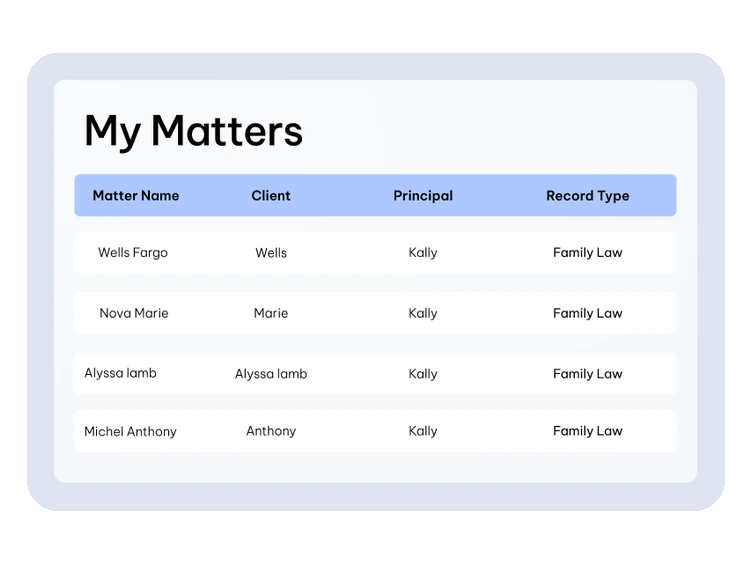
CaseQube My Matters table listing matters with client, principal and record type

CloudDoc

Document management

Petitions, financial disclosures, tax returns and court filings, organized and searchable.

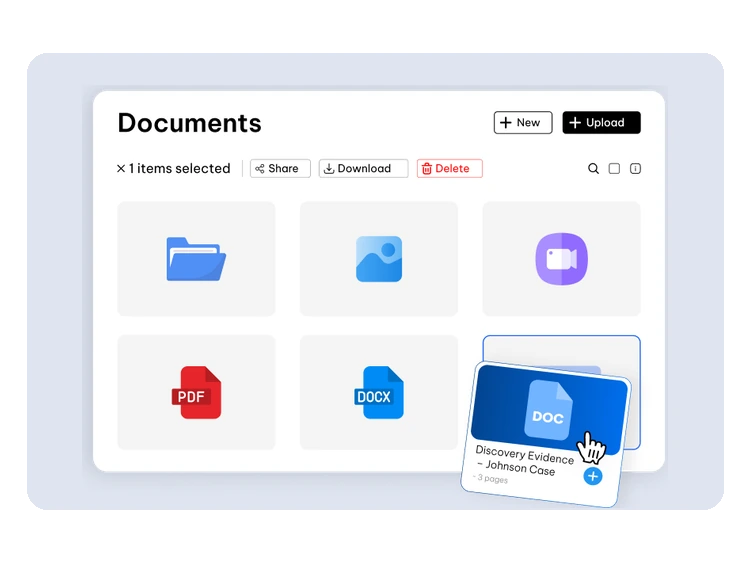
CloudDoc Documents panel with folders, PDF and Word files, and a case document being dragged inExplore CloudDoc

LawAccounting

Accounting, billing and trust

Flat fee billing, fee tracking, payment plans, trust ledgers, receivables and reporting.

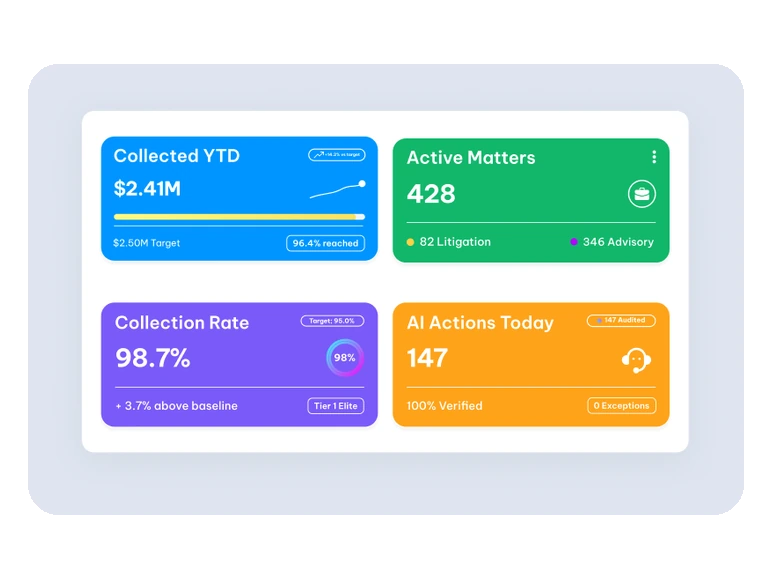
LawAccounting dashboard cards showing fees collected year to date, active matters, collection rate and AI actionsExplore LawAccounting

Maahi

Payments

Card and ACH collection, invoicing and transaction tracking, posted to the client ledger.

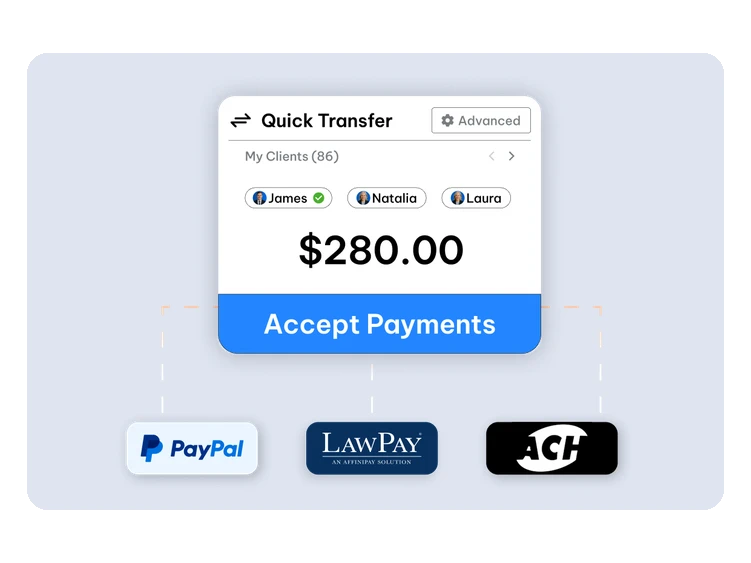
Maahi Quick Transfer panel accepting a client payment by PayPal, LawPay or ACHExplore Maahi

Adopt one product or all four. Each runs on its own.

Frequently Asked Questions

Bankruptcy law firm software helps firms manage the case information, documents, tasks, deadlines, billing, payments, and financial records associated with bankruptcy matters.

LawAccounting's connected suite brings case management, document management, legal billing, trust accounting, payments, and financial reporting into one system.

Bankruptcy billing software helps firms manage legal fees, payment arrangements, expenses, invoices, payments, and outstanding balances across bankruptcy matters.

LawAccounting supports hourly, flat-fee, contingency, retainer, and hybrid billing, with customization at the client and matter level.

Flat-fee billing software helps firms manage matters where the legal fee is agreed upon rather than calculated from each hour worked.

LawAccounting supports flat-fee billing alongside hourly, contingency, retainer, and hybrid arrangements.

Chapter 13 fee tracking keeps fee-related financial activity connected to the client and matter.

LawAccounting provides matter-level billing, receivables, client ledgers, and financial reporting so firms can review fees and payments alongside the rest of the matter's financial activity.

Fee activity can remain connected to the bankruptcy matter within the firm's billing and accounting records. LawAccounting provides matter-level financial tracking and reporting for billing, payments, receivables, and related financial activity.

Trust accounting for advance fees keeps client funds held in trust separate from the firm's operating funds until the fees are properly earned.

LawAccounting provides client-level trust ledgers, IOLTA-compliant workflows, and three-way reconciliation between the bank, client ledger, and trust ledger.

LawAccounting supports retainer and other billing arrangements at the client and matter level, allowing firms to keep payments and outstanding balances connected to the appropriate matter.

Yes. LawAccounting supports vendor and accounts-payable management and hard- and soft-cost disbursement tracking, keeping those costs connected to the matter's financial record.

Yes. LawAccounting includes receivables aging, automated reminders, and collections workflows tied to the matter record.

LawAccounting includes Balance Sheet, P&L, Trial Balance, Client Ledger, AR Aging, WIP, realization, originations, and custom dashboards.

=====================================

Run Your Bankruptcy Practice in One System

Manage cases, documents, deadlines, fee tracking, payment plans, and reporting in one platform built for law firms.