Criminal defense moves faster than most practices and gets paid differently. Hearings change at short notice, discovery arrives in volume, and a missed court date is not a scheduling problem.
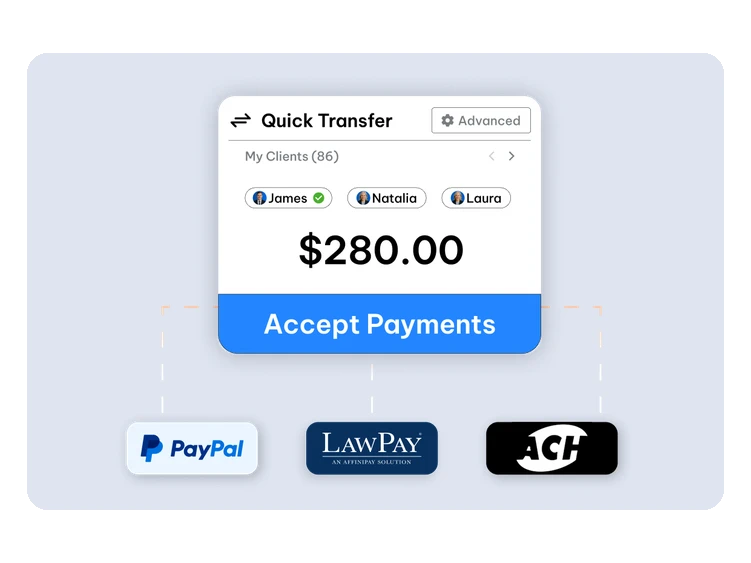
The money is unusual too. Most work is flat fee, often staged, with one fee to take the case and another if it goes to trial. The fee is collected up front and held in trust until it's earned, because a client facing charges may not be able to pay later. Payment plans are common, which means small amounts arriving from a lot of people over months.
Many firms also take court-appointed or conflict panel work, billed to a county or state at set rates through a voucher process. Two revenue streams, two sets of rates, one set of books.
So criminal defense software has two jobs. Keep the cases and the court dates straight, and keep the money accurate across both sides of the practice.