Mass Tort Law Firm Software for Settlements, Trust and Case Costs

Manage contingency fees, claimant trust ledgers, settlement disbursements, case costs and litigation reporting in one connected legal platform.

Mass Tort Billing Software | Contingency Fee Billing | Trust Accounting for Mass Tort Settlements | Matter-Level Financials

Mass tort law firm software for settlements, trust and case costs

What Mass Tort Practice Involves

Mass tort firms represent hundreds or thousands of people harmed by the same drug, device or product, usually on contingency. Cases are often consolidated in a multidistrict litigation, and the firm can spend years funding records, experts and client outreach before any case pays.

When a settlement is reached, it's typically divided among claimants by a matrix or point system and paid through a claims administrator. The firm then pays each claimant's fees, liens, costs and net share out of trust, one ledger at a time. Most mass tort software covers the case up to the settlement statement and leaves the money after that to a separate system.

What LawAccounting Handles on a Mass Tort Docket

Contingency Fee Billing

Set the contingency arrangement on each claimant's matter so the fee follows the recovery, not a spreadsheet. Split, blended and tiered billing structures sit alongside hourly, flat fee and hybrid billing for the rest of the firm's work.

Trust Accounting for Mass Tort Settlements

Every claimant gets a separate trust ledger against their matter, so one person's funds never mix with another's. Overdraft and commingling alerts flag a problem before the transaction posts, and the firm can run multiple trust and operating accounts.

Settlement Disbursement Tracking

Each payment out of trust posts against the claimant's ledger: earned fees, lien payoffs, cost reimbursements and the claimant's net share. Fees move to operating with an approval trail, so every transfer has a record behind it.

Mass Tort Cost Tracking

Costs advanced on a claim are recorded against the matter as hard or soft costs, with vendor bills, approvals and payment runs behind them. Cost advances and client reimbursements are tracked apart from costs the firm absorbs, so the recoverable amount is known when the case resolves.

Mass Tort Profitability Reporting

Reports show fees, costs advanced, WIP and realization by matter, attorney and practice group, with budget versus actual at the matter level. Custom reports filter by practice area and date range, and every figure drills down to the transaction behind it.

Claimant Documents at Volume

CloudDoc takes bulk uploads from desktop or email and files them in matter folders, with OCR and AI tagging for full-text search. Version history and role-based permissions keep medical records and authorizations controlled across every claimant file.

Trust Accounting for Mass Tort Settlements

A mass tort settlement doesn't cover one client. It covers hundreds, and every dollar has to reach the right ledger.

What's built in

Client and matter-level trust ledgers

A separate balance for every claimant, tracked against their matter.

Multiple trust and operating accounts

Each account connected by bank feed and reconciled on its own.

Earned fee transfers with approvals

Fees move from trust to operating with a recorded approval trail.

Three-way reconciliation

Bank balance, trust ledger and client ledger totals compared in one view.

Overdraft and commingling alerts

Raised before a transaction posts, not discovered at month end.

Trust reports and audit trail

State bar trust reports and a full transaction history from live data.

When settlement funds reach the firm

  1. 01

    Awards recorded

    Each claimant's award, from the claims administrator or CaseQube's settlement workflow, is recorded on their matter.

  2. 02

    Funds deposited

    Money posts to each claimant's trust ledger, and the bank feed picks up the deposit for reconciliation.

  3. 03

    Fees transferred

    Earned fees move to operating with an approval trail.

  4. 04

    Liens and costs paid

    Lien payoffs and reimbursable costs are paid from trust and posted to the claimant's ledger.

  5. 05

    Claimant paid

    The net share is disbursed and the ledger closes at zero.

  6. 06

    Everything reconciles

    Bank, trust ledger and client ledgers agree across every claimant, and the trust reports show each step.

The steps are the same as any settlement. The difference is running them for hundreds of claimants in the same stretch of weeks, with every ledger still reconciling at the end.

Where AI Does the Work

AI matches bank transactions to ledger entries during reconciliation, which matters when deposits and disbursements touch hundreds of claimant ledgers at once. It flags unusual activity in receivables and payables and picks up patterns across matters, clients and vendors. CloudDoc reads and tags documents as they're uploaded, so records and authorizations land in the right claimant's file. And you can ask questions about your ledger in plain English, so a partner who wants to know how much is still held in trust for unpaid claimants gets an answer without waiting on a report.

AI output in this platform is a suggestion, not a decision. Every AI-assisted entry goes through the same review, approval and audit trail as anything entered by hand, and your team makes the final call.

One Platform, Four Products

LawAccounting is the financial core of the suite. The other products handle the work around the matter.

CaseQube

Case and matter management

Intake, claimant matters, tasks, deadlines and settlement workflows with payout allocation and lien tracking.

Explore CaseQube
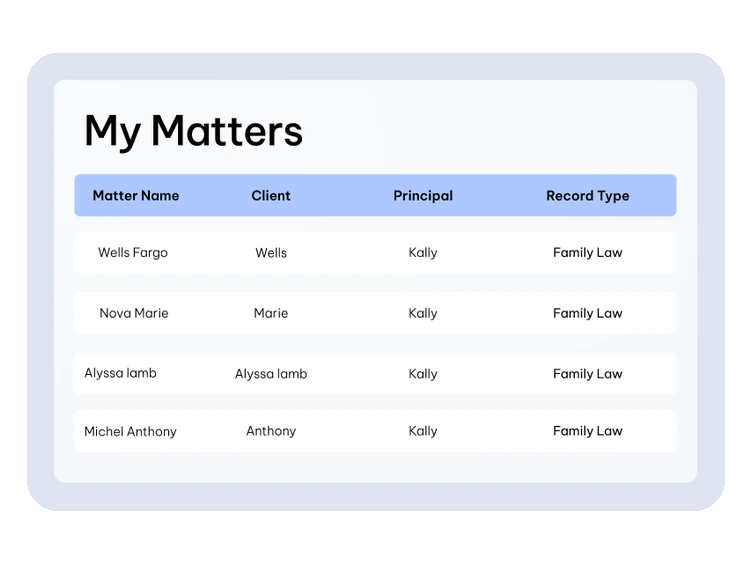
CaseQube My Matters table listing matters with client, principal and record type

CloudDoc

Document management

Medical records, authorizations, fact sheets and correspondence, with bulk upload, OCR and full-text search.

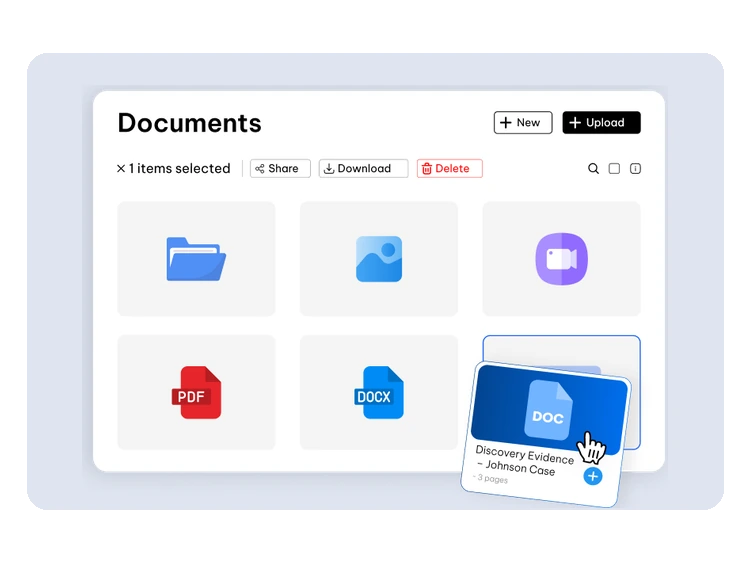
CloudDoc Documents panel with folders, PDF and Word files, and a case document being dragged inExplore CloudDoc

LawAccounting

Accounting, billing and trust

Contingency billing, claimant trust ledgers, settlement disbursements, case costs and reporting.

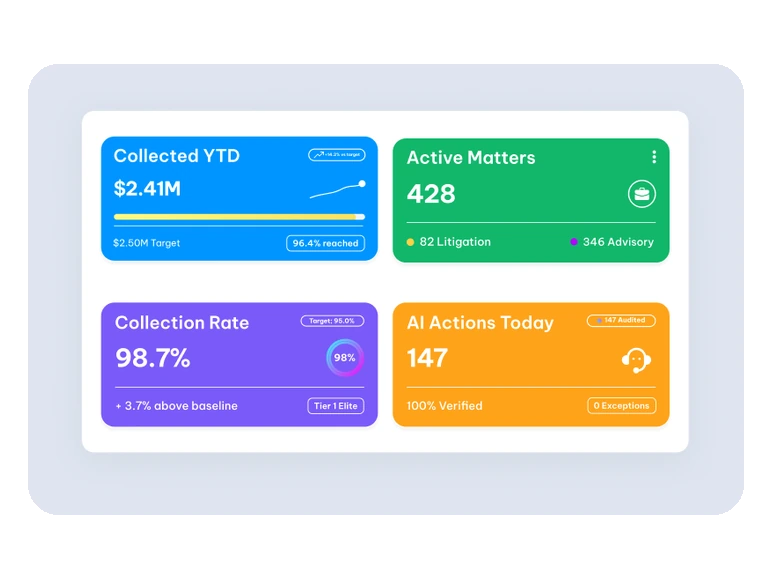
LawAccounting dashboard cards showing fees collected year to date, active matters, collection rate and AI actionsExplore LawAccounting

Maahi

Payments

Card and ACH collection, invoicing and transaction tracking, posted to the client ledger.

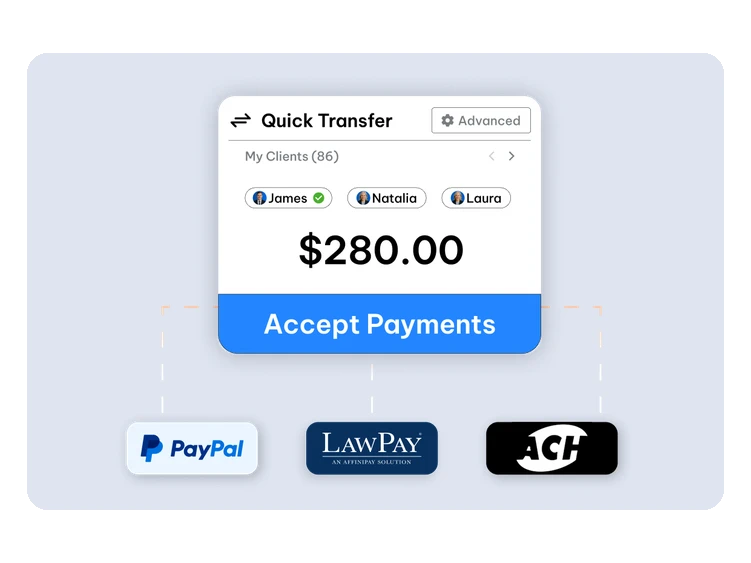
Maahi Quick Transfer panel accepting a client payment by PayPal, LawPay or ACHExplore Maahi

Adopt one product or all four. Each runs on its own.

Frequently Asked Questions

Software that helps firms run large groups of related claims and the money attached to them: intake, documents, deadlines, fees, trust accounting and payouts to each claimant.

LawAccounting's connected suite covers case management, document management, legal billing, trust accounting, payments and financial reporting in one system.

Billing software built for contingency work at volume. It records the fee arrangement on each claimant's matter, tracks costs advanced, and follows what's earned and what's still owed.

LawAccounting supports contingency, hourly, flat fee, retainer and hybrid billing, plus split, blended and tiered structures, set at the client and matter level.

Software that bills a fee based on a percentage of the client's recovery instead of hours worked.

LawAccounting supports contingency billing alongside hourly, flat fee, retainer and hybrid arrangements.

A global settlement is usually divided among claimants by a matrix or point system based on factors like injury and exposure, and paid through a claims administrator. Once funds reach the firm, it pays fees, liens, costs and each claimant's net share from trust.

CaseQube's settlement workflows handle payout allocation and lien tracking. LawAccounting records each deposit and payment against the claimant's trust ledger.

It's the process of holding settlement funds for many claimants in trust, separate from the firm's own money, with a separate record for each person until their share is paid out.

LawAccounting provides client and matter-level trust ledgers, IOLTA workflows, overdraft and commingling alerts, and three-way reconciliation.

A client trust ledger records every deposit and payment made from trust for one client.

In a mass tort practice that means one ledger per claimant. LawAccounting keeps each one separate, so balances never mix and every ledger reconciles against the bank.

Each payment out of a settlement is recorded against the claimant's trust ledger as it happens: earned fees, lien payoffs, cost reimbursements and the net share.

In LawAccounting, fees transfer to operating with an approval trail, and the full sequence shows in the trust reports and general ledger.

Three-way reconciliation compares the bank balance, the trust ledger and the total of all client ledgers. All three should match.

LawAccounting shows all three in one view, which matters most when a single trust account holds funds for hundreds of claimants.

Medical providers, health plans and government programs like Medicare may have a right to be repaid from a claimant's recovery. Those liens are resolved and paid before the claimant receives their net share.

Lien tracking is handled in CaseQube's settlement workflows. LawAccounting records each lien payment out of trust against the claimant's ledger.

Costs are recorded against each matter as they're incurred, marked as hard or soft, with vendor bills, approvals and payment runs behind them. LawAccounting tracks cost advances and client reimbursements separately from costs the firm absorbs.

Yes. Other firms can be set up as vendors, with their bills, approvals and payments recorded in accounts payable and tied to the matter. The fee-sharing terms themselves come from your co-counsel or referral agreements.

Yes. Reports show fees, costs advanced, WIP, realization and effective rate by matter, attorney and practice group, with budget versus actual at the matter level and drill-down to each transaction.

Yes. Bank feeds bring in transactions daily, AI-assisted matching pairs them with ledger entries, batch invoicing handles billing across many matters, and reports roll up across the caseload while still drilling down to a single claimant.

Software that organizes the claims themselves: intake, claimant records, deadlines, tasks, documents and communication.

In the LawAccounting suite, that work is handled by CaseQube, which connects to LawAccounting so each claimant's finances stay tied to their matter.

No. LawAccounting is a full double-entry general ledger with trust accounting, accounts payable, accounts receivable and financial statements, and it supports migration from QuickBooks.

Both. LawAccounting runs on Salesforce and can be used on its own, with CaseQube, or alongside other practice management systems.

LawAccounting includes Balance Sheet, P&L, Trial Balance, Client Ledger, AR Aging, WIP, realization, originations, state bar trust reports and custom dashboards, with period comparisons and export to Excel.

Manage Mass Tort Settlement Funds and Case Costs in One System

Track claimant trust ledgers, disbursements, contingency fees and costs in legal accounting software made for law firms.